Most work environments run smoothly right up to the minute something fails. Emergency alarm misbehave, water leaks hide in ceilings, forklifts clip shelfs, lithium batteries vent, storms reduced power. When the ordinary turns sideways, people seek leadership. A resilient Emergency Control Organisation, or ECO, considers that management shape. It establishes functions, signals, and tested routines so ordinary personnel can act decisively under anxiety. The difference in between a safe, organized discharge and an overwhelmed scramble commonly boils down to whether wardens have actually trained together, drilled the website, and comprehended their lawful duties.
This short article distills sensible lessons from running warden programs across offices, storage facilities, laboratories, healthcare, retail, and mixed-use towers. It likewise describes how nationally identified systems like PUAER005 and PUAER006 convert right into daily capacity, and why the small details - from radio self-control to hat colours - are not trivia yet tools.
What an ECO really does
An ECO is not a board that fulfills annually. It is a functional team developed to control an emergency situation up until the circumstance is settled or the event is turned over to emergency services. Its function is to safeguard life initially, after that residential or commercial property and company connection. In practice that implies increasing the alarm, confirming conditions, working with emptying or sanctuary in position, helping individuals that need assistance, handling communications with building administration and 000, and bookkeeping for people.
During a multi-tenant structure fire in Parramatta several years ago, 4 floor wardens reached their fire sign panel before Safety and security got there. They really did not try to be heroes, they did precisely what training taught: inspect the revealed area, send a warden set to validate, begin a staged emptying from the fire floor and those directly above, and keep the general public address clear for instructions. When Fire and Rescue NSW arrived, the Chief Warden passed a brief, organized quick. The team located and knocked down a tiny electrical fire in an air duct before it spread out. Order, not luck, kept individuals calm and avoided a building-wide run for the stairs.
Roles, responsibilities, and how they function together
A good ECO mirrors incident command in easy type. It appoints authority, makes use of common language, and builds redundancy to ensure that if one person is away, an additional can step in.
Chief Warden. The on-scene commander during an emergency situation. They regulate the action, choose based upon offered details, and communicate with emergency situation services. In multi-building or university settings, a Website Chief Warden works with a number of structure Chief Wardens.
Deputy Chief Warden. 2nd in command, ready to take control of if the Principal is not available or slowed down in liaison jobs. In larger websites the Replacement commonly takes care of interactions and status boards.
Communications Officer. Runs the emergency situation phone, two-way radios, PA news, and message logging. Clear radio method is their domain name. When this duty is experienced, the whole ECO appears competent.
Floor or Location Wardens. Control their areas. They sweep areas, straight occupants to exits, close doors to limit smoke, and report condition. In complex sites, location wardens may cover labs, high bays, or secure zones with one-of-a-kind hazards.
Wardens for persons calling for aid. Often they are traditional wardens, sometimes dedicated support. They guarantee pre-planned personal emergency situation evacuation strategies are triggered and that sanctuary factors, emptying chairs, or different courses are utilized as needed.
First aiders. Not instantly part of the ECO, yet their integration matters. In a real event, an Emergency treatment Planner should work close to the Chief Warden to triage and track injuries.
There is no alternative to clarity of authority. If individuals suggest at the fire indication panel regarding whether to leave, you do not have an ECO, you have a club. Great programs establish a simple decision ladder and drill it up until it feels routine.
The training map: PUAER005 and PUAER006
Australia's proficiency framework gives a valuable backbone.
PUAER005 run as part of an emergency control organisation concentrates on the wardens who execute strategies. A solid puafer005 course builds abilities in alarm acknowledgment, risk assessment at the door, evacuation strategies, search patterns, assisting individuals with special needs, and functioning to the Chief Warden's direction. It likewise covers fire warden training requirements like connecting via radios, understanding building fire safety and security functions, and applying local treatments. The expression puafer005 operate as part of an emergency control organisation is literal. It assumes synergy, not heroics.
PUAER006 lead an emergency situation control organisation is the chief level device. A great puafer006 course instructs choice making under unpredictability, event size-up, resource implementation, and liaison with emergency solutions. It includes just how to craft clear public address messages, how to manage conflicting details, and just how to shift from alarm system to occurrence control without panic. For those stepping into chief fire warden training, puafer006 lead an emergency control organisation attaches the intend on paper to an online, relocating incident.
Both units take advantage of site-specific overlays. A distribution centre with high-rack storage, battery-powered devices, and outside lawn threats requires a different focus than a clinic with oxygen and susceptible people. The best warden training takes the nationwide competency and weds it to the structure's systems, risks, and culture.

Fire warden training that relocates beyond slides
Too many programs count on a lengthy slide deck and a multiple-choice test. That method misunderstands. Reliable fire warden training begins in the building. Individuals find out where the exit doors really are, which ones open up to stairs, which open up to a laneway, which are startled, and which have a delayed egress. They stand at the fire indicator panel and decode an area description. They take care of the radios, find the battery backup, and find out exactly how to silence a mistake tone without silencing an alarm.
Practical circumstances give muscle mass memory. As an example, a workout may replicate a smoke detector activation in a level 3 cooking area, with odor of toast but no visible smoke. The purpose is to confirm the alarm system, manage the general public address to ensure that occupants do not ignore it, and either reset or leave based upon searchings for. Another circumstance may entail a forklift effect in a storehouse aisle and a suspected gas leakage. Below, wardens find out to isolate the area, restrict ignition resources, and relocate team to a safe setting up point without obstructing the major access for going to crews.
It deserves adding short components that usually drop in between the cracks. Radio self-control is one. A lot of ECOs crumble since several people key up simultaneously. Instruct a basic style. Determine yourself, who the message is for, where you are, what you see, what you require. Teach brevity and the worth of silence while someone is explaining problems. Show the behavior of duplicating essential messages as soon as for clarity.
What the hats and helmets mean
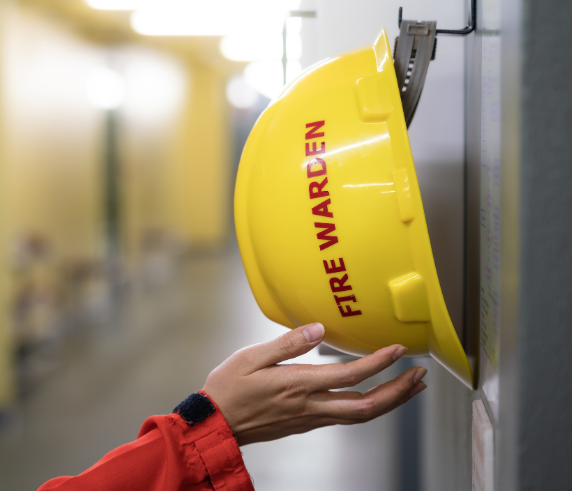
Colours offer a purpose. In a crowd, clear aesthetic hints help. In Australia, white recognizes the Chief Warden, and red recognizes wardens. So if you are asked what colour helmet does a chief warden wear, or the chief warden hat colour in a sensible sense, the response is white. A chief fire warden hat colour that differs is typically a site-specific variant in an unique context, yet common technique is white for chief, red for wardens. Some sites use yellow for interactions, eco-friendly for first aiders, and blue for health and safety representatives, though those roles do not change warden duties.
The factor is not pageantry. It is function. When two firemans arrive and ask who is in charge, the white chief warden hat cuts through the noise. When a flooring warden opens up a stairway door and marshals website traffic, the red cap says authority. During drills, motivate wardens to put the hat on as quickly as they presume the role, not 5 minutes later on at the setting up point.
Fire warden requirements in the workplace
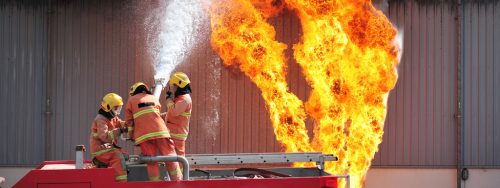
The form of an ECO relies on the building size, risk profile, passenger mix, and hours of procedure. Workplaces with 200 staff require a Chief Warden, Replacement, at the very least one Communications Police officer, and flooring wardens to maintain the ratio practical, usually one per 20 to 30 persons depending upon design. Sites with risky locations - labs, fuel shops, battery areas, kitchens with gas, or aged treatment wings - require additional wardens with area-specific training.
Fire warden requirements also include currency. People relocate work. A training document that looked healthy 6 months earlier might not make it through a round of promotions. Establish a system to check availability and coverage monthly, not each year. If your roster shows two wardens for level 5 but both work hybrid and are rarely on the very same days, you have a space. Address it with alternates, protection from nearby floorings, or shift-based assignments.
If your office extends weekends and nights, remember that the ECO clock steps in hours, not head count. A silent Saturday retail change still requires an emergency warden with tricks, radio, and alarm accessibility. Where this is not feasible, secure down the areas that can not be supported and document the after-hours treatment so safety and security service providers understand exactly who to call.
Chief warden duties that matter when it is messy
Leadership looks various in a hallway full of smoke than in a boardroom. A Chief Warden's job is to streamline choices for others and maintain the system moving. That begins with the initial minute.
Start with size-up. What does the panel claim, and what does a human being see? Alarm kinds issue - smoke near a cooking area is various from a warm detector in a plant area. Time of day issues - 10 am on a Tuesday is not the like 6 pm on a Friday. If you can not verify problems swiftly, treat the alarm system as authentic and escalate.
Coordinate utilizing the smallest variety of messages that provide the largest impact. For example: "All wardens, this is Principal. Degree 4 area 6 alarm energetic. Degree 4 wardens verify. Level 3 and 5 prepare to evacuate. Communications, hold up until verification then reveal." Once you dedicate to leave, devote totally. Fifty percent measures create people to wait in doorways.
Manage the setting up point, not simply the structure. If your assembly point is exposed to summertime warmth or winter season rainfall, make a backup strategy with sheltered options. Keep roll calls easy. Use checklists by location or team and approve that perfection is impractical in the very first ten mins. The step of an excellent chief fire warden is not a cool spreadsheet, it is a process that gets individuals to security and provides reacting crews a systematic brief.
Finally, handover cleanly. When emergency services arrive, the chief emergency warden must offer area, kind of alarm system, actions taken, individuals unaccounted for, risks on site, and any type of keys, plans, or swipe accessibility. Then step back, keep the ECO in support setting, and prepare to take care of re-entry or extended disruption.
The educational program for a resilient program
A rounded warden course ought to provide a few core expertises that hold under stress. The puafer005 course develops the bedrock for wardens, and a chief warden course or chief fire warden course adds the leadership layer connected to puafer006. Whether you run a solitary emergency warden course or split it, make certain the following proficiencies are genuinely exercised, not just defined:
- Familiarity with the building's fire detection and suppression systems, including the fire indicator panel, warden intercom phones where set up, lawn sprinkler valves, fire doors, staircase pressurisation, and emergency lighting. Movement and control under stress: exactly how to sweep a location promptly without missing little rooms, just how to shut doors to include smoke, exactly how to maintain individuals relocating stairways without bottlenecks, and exactly how to use refuge factors and discharge aids. Communication discipline: radio procedures, news, escalation causes, and just how to log and communicate details without slowing down the response. Assistance preparation: pre-identified individuals who require help, emptying chair usage, bariatric factors to consider, and alternatives when lifts can not be used. Decision making: alarm verification, criteria for sanctuary in position versus evacuation, and when to hand control to the fire brigade without attempting to fix borderline cases.
Those five areas cover most real-world difficulties. If one is weak, your ECO will certainly lean tough on luck when the alarm sounds.
Drills that instruct greater than compliance
Annual drills please a minimum requirement, however frequency alone does not assure discovering. A drill that shows have to amaze simply sufficient to expose weak spots, but not so much that people distrust the system. Mix types. Run a set up evacuation with complete PA guidelines so brand-new personnel discover the standard. After that run a verification drill where wardens need to explore a solitary triggered zone without leaving the entire building. Periodically add an issue, such as a blocked staircase or a warden "not available," to evaluate redundancy.
Debrief right away and briefly. Two concerns are enough to start: What assisted? What slowed us down? Capture realities. If Staircase B was secured on level 2 and postponed egress had not been overriding, log it as a facilities activity, not a human failure. If two radios can not get to the basement plant space, test insurance coverage and think about a repeater or repositioned antenna.
Metrics include discipline. Track time to initial warden arrival at the panel, time to confirmation, time to first , and time to all-clear at the assembly factor. You do not require millisecond accuracy. A stopwatch and a note are enough. Renovation over three drills informs you whether training is becoming capability.
Edge situations and judgment calls
Real cases hardly ever match the book. Right here are scenarios where judgment matters.
False alarm system tiredness. Cooking areas activate annoyance smoke detector. Team learn that nothing bad takes place when the alarm sounds, and conformity wears down. Counter this by changing the pattern of response. If a kitchen alarm system causes two times in a month, escalate the following one to a partial emptying and send out a message to the entire floor reminding them there is no such thing as a safe alarm system. Obtain facilities to take care of air flow or toaster placement. Culture shifts when the pattern shifts.
Shelter in position. Not every event asks for evacuation. A gas leak outside the structure, a violent culprit case, or airborne irritants in the street warrant keeping individuals inside, shutting fresh air intakes if you regulate them, and limiting activity. Instruct wardens to recognise these situations and to supply tranquil, certain directions over the PA. Evacuating into a threat is worse than waiting 5 mins in a recognized environment.
Persons needing help. A one-size strategy falls short below. Deal with individuals to develop individual emergency situation emptying plans. Examination emptying chairs on the real staircases, not a training area. Learn exactly how to relocate with dignity and safety. Never intend to count on firemans to bring people unless the structure's fire separated lifts are developed for usage under emergency situation control and you have a collaborated procedure.
After-hours alarm systems. If your structure is staffed by a single guard or a skeletal system team, write a treatment that encourages them. Make sure they have secrets, phone numbers for wardens on-call, and authority to leave or call 000 without waiting for permission from a manager.
Hazardous processes. Laboratories with course 3 or 4 dangers, battery power storage systems, or data centres with clean agent suppression all transform the playbook. A warden entering an area with a clean agent discharge must understand that a closed room might be oxygen depleted. Train for door checks, signage acknowledgment, and hold points.
Building the pipe: from volunteer to trusted leader
Volunteers make ECOs feasible, however volunteers need treatment. Avoid the classic blunder of appointing the most enthusiastic person as Chief Warden without assistance. Construct development. Start with a warden course that aligns with puafer005. Let new wardens watch seasoned ones during a drill. Identify two or 3 with the temperament for command - calm voice, quick synthesis, no vanity - and placed them through chief warden training lined up to puafer006. Couple them with a mentor for the first year.
Recognition issues. Not everyone desires a badge, however the majority of appreciate recommendation when a drill goes well or a real occurrence is handled with grace. Maintain the work reasonable. If wardens invest even more time bothersome concerning chaotic exits than training for emergency situations, they will wear out. Shift compliance tasks to facilities and security teams so the ECO trains for the job it owns.
Documentation that breathes
Plans help only if individuals check out and use them. Keep your emergency situation procedures functional and brief. The complete emergency situation strategy can sit in a binder for auditors, yet wardens need a fast recommendation - one or two pages with roles, radio networks, panel place, alarm system types, assembly factors, and decision triggers. Laminate copies near the panel and in warden sets. Keep a digital variation on the intranet and on the tools used by the Communications Officer.
For multi-site organisations, standardise framework yet localise material. A retail chain can make use of the exact same ECO framework across stores, yet each store's design and evacuation routes need to specify. Make updating simple. After a repair that alters a departure, update the plan the very same week, not in the next annual review.
Working well with emergency situation services
Firefighters enjoy a well-briefed site. When teams arrive and locate a calm Chief Warden, a printed plan that mirrors the building, secrets that match doors, and a short list of unaccounted persons, they take a breath less complicated. Excellent connections begin before the emergency. Invite the local terminal to stroll the website yearly, especially after major changes. Program them the plant space, the lawn sprinkler isolation shutoffs, the battery room, the roofing accessibility, and the area where forklifts park and charge. Ask what would certainly aid them if they had to go to during the night with only a security guard on site.
Your ECO need to likewise understand what not to do. Do not reset the panel Click here for info mid-incident to see if the mistake clears. Do not silence alarms for convenience unless the Chief Warden has actually established it is secure and essential for interactions. Do not keep people in the entrance hall while you determine what to do. Either return them to their floors or relocate them to the setting up point.
The hat colour question, and various other simple signals
People typically ask about fire warden hat colour since straightforward, noticeable hints function. As stated, white shows the Chief Warden. Red suggests wardens. If your website utilizes additional colours, publish them where everyone can see and maintain the palette little. More than 3 or 4 colours types complication. When you run chief warden training, include a brief exercise where wardens wear their hats presently of activation and stand in a noticeable rally point. That tiny ritual minimizes the moment spent searching for leaders.
Putting it together on an actual day
Picture a regular weekday. An odor of smoke on degree 6, alarm triggers: smoke detector in area 6. The Chief Warden recognizes the alarm system, radios Level 6 wardens to confirm, and signs the Communications Officer to prep a holding message. Within ninety seconds, the confirming warden records light smoke in a kitchen space, no fires, likely microwave event. The Chief orders Level 6 left, instructs Degree 5 to prepare to relocate, and sends a warden pair with an extinguisher and a thermal scanner, if readily available. The Communications Policeman makes a calm PA. Protection shuts down air handling to degree 6 to quit spread. The microwave is unplugged, fire blanket is utilized to smother the resource, smoke removes. Fire and Rescue NSW are required security confirmation because smoke was present. Wardens maintain individuals off degree 6 up until the staff gets here and aerates the area. Re-entry is organized flooring by floor. Later that day, the Chief Warden sends a short debrief with two activities: cooking area signs updated, and a suggestion that food need to not be left ignored. That is an ECO working the means it should.
Where to from here
If you have no ECO, begin tiny yet beginning. Recruit wardens, run an emergency warden course that lines up with puafer005, and map your building's essential attributes. Identify a Chief and Replacement, and invest in chief fire warden training aligned with puafer006. If you have an ECO on paper, pressure-test it. Run a drill without notice to wardens and see just how the system responds. Fix what slows you down. Update emergency warden training records that do not match truth. Change low-battery radios. Stroll the staircases in both directions.
The objective is not perfection. The goal is skills under anxiety. When alarm systems audio, people follow leadership that looks prepared. A resilient Emergency situation Control Organisation does not assure that absolutely nothing will fail. It promises that when something does, your individuals will certainly understand who to search for, what to do, and exactly how to obtain every person home.
Take your leadership in workplace safety to the next level with the nationally recognised PUAFER006 Chief Warden Training. Designed for Chief and Deputy Fire Wardens, this face-to-face 3-hour course teaches critical skills: coordinating evacuations, leading a warden team, making decisions under pressure, and liaising with emergency services. Course cost is generally AUD $130 per person for public sessions. Held in multiple locations including Brisbane CBD (Queen Street), North Hobart, Adelaide, and more across Queensland such as Gold Coast, Sunshine Coast, Toowoomba, Cairns, Ipswich, Logan, Chermside, etc.
If you’ve been appointed as a Chief or Deputy Fire Warden at your workplace, the PUAFER006 – Chief Warden Training is designed to give you the confidence and skills to take charge when it matters most. This nationally accredited course goes beyond the basics of emergency response, teaching you how to coordinate evacuations, lead and direct your warden team, make quick decisions under pressure, and effectively communicate with emergency services. Delivered face-to-face in just 3 hours, the training is practical, engaging, and focused on real-world workplace scenarios. You’ll walk away knowing exactly what to do when an emergency unfolds—and you’ll receive your certificate the same day you complete the course. With training available across Australia—including Brisbane CBD (Queen Street), North Hobart, Adelaide, Gold Coast, Sunshine Coast, Toowoomba, Cairns, Ipswich, Logan, Chermside and more—it’s easy to find a location near you. At just $130 per person, this course is an affordable way to make sure your workplace is compliant with safety requirements while also giving you peace of mind that you can step up and lead when it counts.